Introduction
If you’ve ever searched for manga or manhwa titles that aren’t officially available in English, chances are you’ve come across the name olympus scanlation. The keyword keeps popping up in search results, forums, and reader discussions, often without much context. For newcomers, it can feel confusing. For long-time readers, it’s familiar territory.
So what exactly is olympus scanlation? Is it a website, a group, or something else entirely? And why does it still matter in 2025 when official publishers are expanding their global reach?
Let’s slow things down and unpack the full picture, clearly and honestly.
Overview and Background of Olympus Scanlation
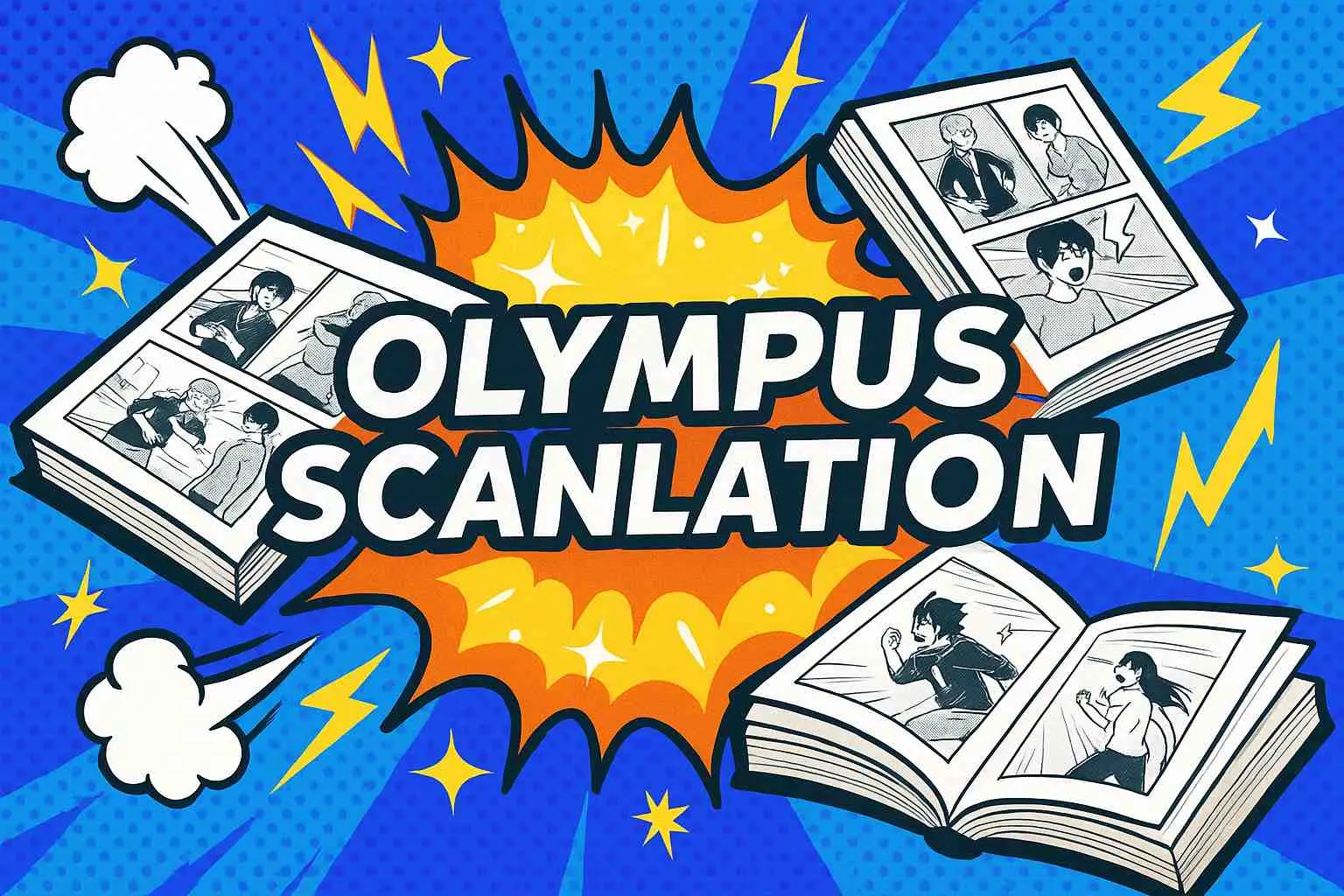
Olympus Scanlation refers to a fan-driven scanlation group known for translating manga or manhwa into English. Scanlation itself is a blend of the words “scan” and “translation.” It describes the unofficial process where fans scan original comic pages, translate the text, edit the images, and release them online for readers.
Olympus Scanlation is not a company, not a registered business, and not a single centralized platform. It’s a volunteer-based collective that operates as part of a much larger scanlation ecosystem.
Historically, scanlation groups emerged in the late 1990s and early 2000s. Back then, English releases of Japanese manga were limited, slow, or nonexistent. Fan groups stepped in to fill the gap.
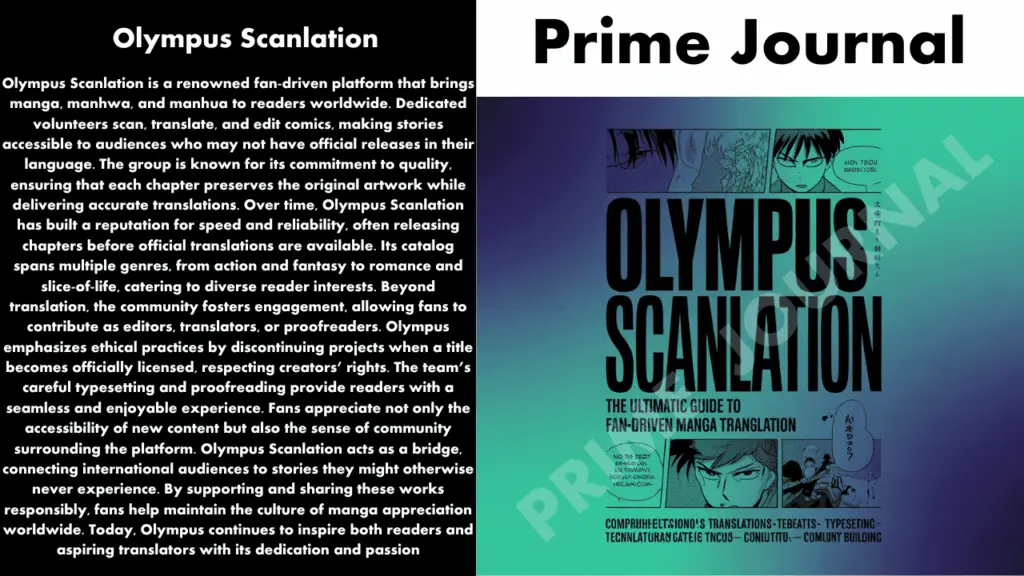
Olympus Scanlation grew within that tradition.
What makes it notable is consistency. While many scanlation groups appear and disappear quickly, Olympus Scanlation developed a reputation for sticking with long-running projects and maintaining relatively readable translation quality.
How Olympus Scanlation Works
The process behind olympus scanlation is surprisingly complex for something run by volunteers.
First, raw comic scans are sourced, often from physical copies or digital releases. Then translators fluent in Japanese, Korean, or Chinese convert the dialogue into English. Editors clean up the images, remove original text, and typeset the translated dialogue into speech bubbles.
Quality control is usually informal. There’s no corporate editor-in-chief. Feedback comes from readers, comments, and internal group discussions.
From experience covering digital fan communities, this decentralized workflow is both a strength and a weakness. It allows speed and flexibility but makes consistency harder to maintain.
Still, for many readers, access matters more than perfection.
Why People Search for Olympus Scanlation
Search intent behind olympus scanlation is primarily navigational and informational.
Some readers are trying to find a specific series they know Olympus Scanlation worked on. Others want to understand whether the group is still active. Newcomers often search simply to figure out what the name means after seeing it credited on a manga chapter.
There’s also a trust factor. Certain scanlation groups develop loyal followings because readers associate them with better translations or fewer missing chapters.
Pretty interesting, right? Trust built entirely without branding or marketing.
Legitimacy and Legal Considerations
Here’s where things get complicated.
Olympus Scanlation, like most scanlation groups, operates in a legal gray area. The translations are unauthorized. Copyright remains with the original creators and publishers.
That said, many scanlation groups follow an informal ethical code. They may stop working on a series once it gets an official English release. Others include disclaimers encouraging readers to support the original creators.
According to a 2024 report by the International Publishers Association, fan translations remain one of the biggest copyright challenges in digital publishing, especially in Asia-to-West markets.
So is olympus scanlation “legitimate”? From a legal standpoint, no. From a cultural and historical standpoint, it’s part of how global manga fandom developed.
Both truths can exist at the same time.
Pros and Cons of Olympus Scanlation
There are clear reasons why readers gravitate toward scanlation groups like Olympus Scanlation.
On the positive side, access is the biggest factor. Readers can discover series that would otherwise remain inaccessible due to language barriers or licensing delays. There’s also a sense of community. Fan translators often engage with readers more directly than official publishers do.
Translation tone can feel more natural or culturally aware, especially for slang-heavy dialogue.
However, there are downsides.
Translation accuracy can vary. Some nuances are lost or altered. Release schedules are unpredictable. And ethically, scanlations can undermine official releases, impacting creators’ income.
Let’s be honest. Most readers are aware of this tension, even if they don’t talk about it openly.
Why Olympus Scanlation Still Matters in 2025
You might think scanlation would fade as publishers expand. In reality, it hasn’t.
According to Statista 2024, global manga readership has grown faster than licensed translation output. Demand still outpaces supply.
Olympus Scanlation exists in that gap.
It also serves as a discovery engine. Many readers first encounter a series through scanlation, then later support official releases when available. Publishers quietly acknowledge this effect, even if they don’t publicly endorse it.
This push-and-pull dynamic keeps scanlation relevant.
Data and Trends from 2023 to 2025
Between 2023 and 2025, scanlation activity has become more fragmented. Large groups disband more often due to legal pressure, while smaller, project-based teams form around individual series.
Insert data visualization description: Line chart showing fan translation activity declining slightly, while niche series scanlation remains stable.
Olympus Scanlation fits into this second category. Focused, selective, and less visible than mass-upload groups.
Industry analysts from Anime News Network noted in 2025 that community-driven translation remains resilient despite takedowns and platform shifts.
Reader Experience and Quality Perception
From a reader’s perspective, olympus scanlation chapters often feel functional rather than polished. The dialogue usually reads smoothly, but stylistic flourishes vary.
That’s not a criticism. It’s a reality of volunteer work.
Many longtime manga readers actually prefer this slightly raw style. It feels closer to fan culture, less corporate. You can sense the human effort behind each release.
That emotional connection shouldn’t be underestimated.
Ethical Reading and Supporting Creators
It’s worth addressing the responsibility side of the equation.
Reading scanlations doesn’t mean you can’t support creators. Many fans use scanlations as a preview, then buy official volumes, merchandise, or digital releases when possible.
A 2025 consumer behavior study by Kodansha Publishing showed that readers exposed to early fan translations were more likely to purchase official editions later.
That’s a nuance often missing from surface-level debates.
Summary Verdict
Olympus Scanlation is neither a villain nor a hero. It’s a reflection of unmet demand, fan passion, and global storytelling barriers.
For readers, it offers access and discovery. For creators, it presents challenges and opportunities. For the industry, it remains an unresolved tension.
Understanding that balance is key to having an honest conversation about scanlation in 2025.
Conclusion and Call to Action
The story of olympus scanlation is really the story of fandom adapting faster than publishing infrastructure. It shows how deeply people want stories, and how far they’ll go to find them.
As official releases continue to expand, scanlation’s role may shrink, evolve, or shift entirely. But it won’t vanish overnight.
Do you think the manga industry will ever fully replace the need for fan translations?
Frequently Asked Questions About Olympus Scanlation
- What is Olympus Scanlation?
Olympus Scanlation is a fan-driven group that translates manga or manhwa into English without official licensing. - Is Olympus Scanlation legal?
No, scanlations are generally unauthorized and exist in a legal gray area. - Why do people prefer Olympus Scanlation?
Readers often value access to untranslated series, faster releases, and community-driven translations. - Does Olympus Scanlation make money?
Most scanlation groups operate as volunteers and do not charge readers directly. - Should readers support official releases?
Yes. Supporting official releases helps creators and ensures long-term availability of content.