An air conditioner that runs but fails to cool your home is one of the most common — and frustrating — HVAC problems homeowners face, especially during peak summer heat. The unit sounds like it is working. The fan is spinning. But the air coming from the vents is warm, or barely cool.The good news: many causes are diagnosable without calling a technician. This guide covers every likely reason your AC is not blowing cold air, how to troubleshoot each one, when to call a professional, and what maintenance prevents the problem from returning.
9 Reasons Your Air Conditioner Is Not Blowing Cold Air
Each component in a central air system — or a window or mini-split unit — must work in sequence for cold air to reach your rooms. A failure at any point breaks the chain. Here are the nine most likely culprits, ranked from easiest to diagnose to most complex.
1. Dirty or Clogged Air Filter
A clogged air filter is the single most common cause of poor AC cooling, yet it is also the easiest to fix. Filters trap airborne particles — dust, pet dander, pollen, mold spores — and when they become blocked, airflow through the evaporator coil drops dramatically. With restricted airflow, the coil cannot absorb heat efficiently, and the air delivered to your rooms feels lukewarm rather than cold.
Most HVAC manufacturers and the U.S. Department of Energy recommend inspecting filters once a month during cooling season and replacing them every 1 to 3 months, depending on household conditions (pets and allergies warrant more frequent changes). A clogged filter also forces the blower motor to work harder, raising energy bills and shortening equipment life.
Fix: Turn off the system. Locate the filter in the return air duct or inside the air handler. If it is visibly gray or brown with accumulated debris, replace it with the correct MERV-rated filter for your unit. Restart the system and check cooling within 20 to 30 minutes.
2. Low Refrigerant Levels (Refrigerant Leak)
Refrigerant — typically R-410A in modern systems or R-22 in older ones — is the chemical agent that absorbs heat from indoor air and transfers it outside. When refrigerant is low, the system cannot move enough heat, and warm air continues to circulate inside. Unlike a car, an AC system is a closed loop; refrigerant does not get consumed. Low levels almost always mean there is a leak somewhere in the system.
Warning signs of low refrigerant include:
- Warm or room-temperature air from supply vents despite normal system operation
- Ice forming on the refrigerant lines or evaporator coil
- A hissing, gurgling, or bubbling sound near the indoor unit or refrigerant lines
- Cooling cycles that run significantly longer than usual without reaching the set temperature
- Higher-than-normal electricity bills with less cooling output
This is not a DIY repair. Under U.S. Environmental Protection Agency (EPA) Section 608 regulations, only EPA-certified technicians can legally purchase and handle refrigerants. A technician will locate and repair the leak, then recharge the system to manufacturer specifications.
3. Thermostat Set Incorrectly or Malfunctioning
Before assuming a mechanical fault, verify your thermostat. An incorrect setting or a failing thermostat is responsible for a surprising number of service calls that turn out to require no repair at all.
Check these settings first:
- Mode: The thermostat must be set to COOL, not FAN ONLY. In fan-only mode, the compressor does not run — the blower circulates unconditioned room air.
- Set point: The target temperature must be below current room temperature. If the room is 74 degrees and the thermostat is set to 75, the system has no reason to cool.
- Batteries: Weak batteries cause display errors and communication failures between the thermostat and the air handler.
- Location: A thermostat mounted near a lamp, sunny window, or kitchen appliance reads higher temperatures than actual room conditions and may short-cycle the system.
If the thermostat is programmable or smart, check whether a scheduled setback or away mode is active. If you recently installed a new thermostat and cooling is intermittent, verify the wiring against the manufacturer’s wiring diagram — a misconnected common wire (C-wire) is a frequent smart thermostat installation error.
4. Dirty or Blocked Outdoor Condenser Unit
The outdoor condenser unit is where your AC releases the heat it pulled from inside your home. The condenser coil transfers heat to the outdoor air through metal fins. When those fins are coated with dirt, grass clippings, cottonwood, or debris — or when landscaping blocks airflow around the unit — heat cannot escape efficiently. The system works harder, cooling output drops, and in severe cases the compressor overheats and shuts down.
A typical condenser needs at least two feet of clearance on all sides and above. Overgrown shrubs, fencing placed too close, or a storage area built around the unit can all starve it of airflow.
Fix: Turn off power to the unit at the disconnect box before cleaning. Use a garden hose to gently rinse the coil fins from the inside out, removing built-up debris. Straighten bent fins with a fin comb if needed. Trim back nearby vegetation and remove any stored items blocking airflow.
5. Frozen Evaporator Coils
The evaporator coil, located inside the air handler, is where refrigerant evaporates and absorbs heat from your air. When airflow across the coil drops (usually because of a dirty filter or blocked return vents) or refrigerant levels are low, the coil surface temperature falls below freezing. Moisture in the air condenses on the coil and freezes, forming a layer of ice that progressively blocks airflow and halts cooling entirely.
Signs of frozen coils include weak airflow from all vents, visible frost on refrigerant lines leading to the indoor unit, and water puddling around the air handler as ice melts after the system shuts off.
Fix: Switch the system off and set the fan to ON (not AUTO) to help the ice melt. This may take 2 to 24 hours depending on how thick the ice buildup is. Never chip at the ice mechanically — this can damage the coil. Once defrosted, identify and fix the root cause (usually a dirty filter or low refrigerant) before restarting in cooling mode.
6. Compressor Failure
The compressor is the heart of an air conditioning system — it pressurizes the refrigerant and drives the entire cooling cycle. A failing or seized compressor means refrigerant cannot circulate, and the system produces no cooling regardless of what else is working correctly.
Compressor issues are typically characterized by loud banging, clicking, or grinding noises at startup, a circuit breaker that trips repeatedly when the AC runs, or a system that starts but shuts off within minutes. Compressor failure is more common in older units (typically 10 to 15 years or older), in systems that have repeatedly operated with low refrigerant, or in units that have experienced electrical surge damage.
Compressor replacement is one of the most expensive AC repairs, often costing between $1,200 and $2,800 depending on unit size and system type. For systems approaching the end of their expected lifespan, full replacement may be more cost-effective than compressor repair.
7. Faulty Capacitor or Fan Motor
Capacitors are cylindrical electrical components that give the compressor and fan motors the power boost needed to start and keep running. When a capacitor weakens or fails, the motor it serves struggles to start, runs inefficiently, or does not run at all. A failed outdoor fan motor means the condenser cannot release heat — even if the compressor is running.
A failing capacitor sometimes produces a humming sound when the unit attempts to start, or you may notice the fan spinning very slowly or not at all. Capacitor failure is one of the more common repairs on AC units that are 5 to 10 years old, particularly in regions with extreme summer heat, and is typically a relatively low-cost fix ($150 to $400 including labor) compared to compressor or coil repairs.
8. Ductwork Leaks or Insulation Problems
Even when the AC system itself is functioning properly, conditioned air can escape before reaching your living spaces. The U.S. Department of Energy estimates that typical duct systems lose 20 to 30 percent of conditioned air through leaks, holes, and poorly connected sections. Leaky ducts are particularly common in homes with older ductwork routed through unconditioned attic or crawlspace areas.
Symptoms of duct leaks include rooms that are consistently harder to cool than others, high energy bills despite normal runtime, and visible dust streaking around vent registers. Sealing and insulating ducts is a high-value home improvement that pays back in both comfort and energy savings.
9. Undersized or Aging System
An air conditioner that is too small for the space it serves will run continuously without ever reaching the set temperature on very hot days. Proper sizing (measured in BTUs or tons) is calculated based on square footage, ceiling height, insulation quality, window area, and local climate — not just room count. A unit that was appropriately sized a decade ago may now be inadequate if the home has been expanded or insulated differently.
Similarly, systems older than 15 years lose efficiency progressively. HVAC systems are rated by SEER (Seasonal Energy Efficiency Ratio); modern systems start at SEER 14 to 16, while equipment from 2005 or earlier may have original SEER ratings of 8 to 10 and real-world performance lower than that due to wear.
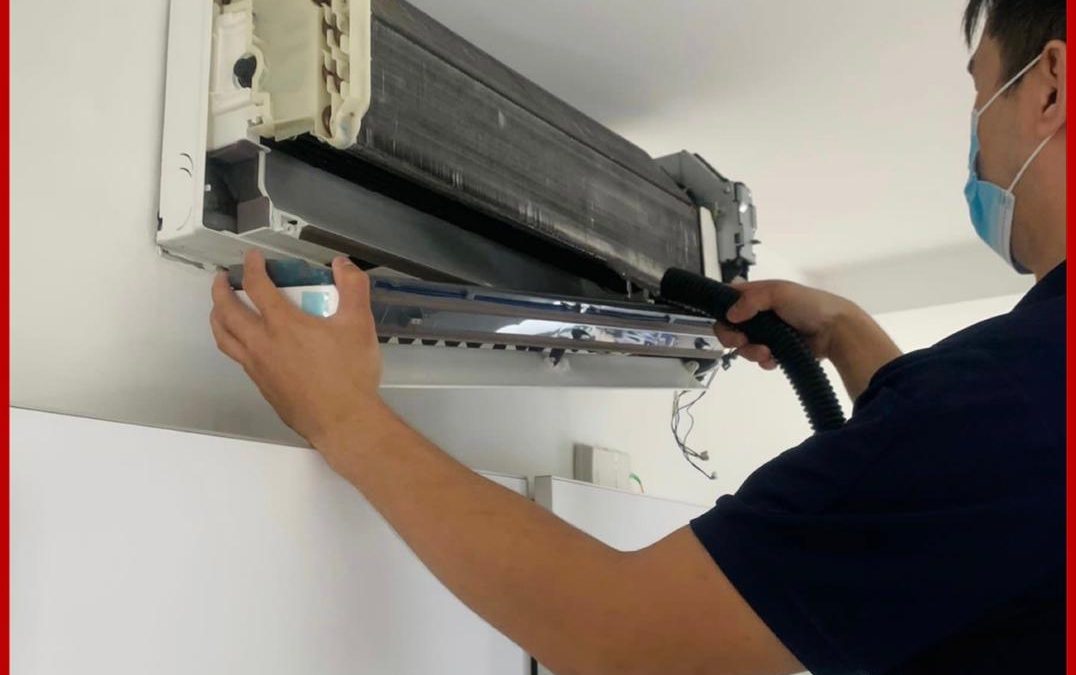
Step-by-Step Troubleshooting: What to Check Before Calling a Technician
Run through these checks in order before scheduling a service call. Many cases of an AC not cooling properly are resolved through one of the first three steps.
- Confirm thermostat mode is set to COOL and the target temperature is at least 2 to 3 degrees below current room temperature.
- Check and replace the air filter if it appears dirty or has not been changed in the past 60 days.
- Check the circuit breaker panel for a tripped breaker labeled for the AC or air handler. Reset it once if tripped — if it trips again immediately, stop and call a technician.
- Go to the outdoor unit and confirm the condenser fan is spinning. Inspect the unit for debris accumulation and clear any blockages within two feet.
- Check all supply vents and return air grilles inside the home — make sure none are closed or blocked by furniture.
- Inspect the refrigerant lines (the insulated copper pipes running into your indoor unit) for frost or ice. If you see ice, turn the system off and let it thaw before troubleshooting further.
When to Call an HVAC Professional
If the steps above do not restore normal cooling, or if you encounter any of the following, schedule a professional diagnostic visit rather than continuing to troubleshoot on your own:
- Warm air persists after filter replacement and thermostat correction
- Ice repeatedly forms on the evaporator coil after defrosting
- You hear loud banging, grinding, or clicking from either unit
- You notice a sweet, chemical, or musty smell near the indoor unit — these can indicate refrigerant leaks or mold growth on coils
- The circuit breaker trips repeatedly when the AC runs
- Energy bills have spiked more than 15 to 20 percent without a change in usage
Attempting repairs involving refrigerant, electrical components, or the compressor without proper training and certification carries real risks: personal injury, equipment damage, and potential EPA violations.
Preventive Maintenance: How to Keep Your AC Blowing Cold All Season
Most air conditioning failures are preventable with consistent, simple maintenance. Building these habits into your routine significantly reduces both repair frequency and energy costs.
Monthly: Check and Replace the Air Filter
During summer months when the system runs daily, inspect the filter every 30 days. Homes with pets or residents with allergies should replace filters every 30 days regardless of appearance. A clean filter is the single highest-return maintenance action a homeowner can take.
Seasonally: Clean the Outdoor Condenser
Before the cooling season begins each spring, rinse off the condenser coil with a garden hose, check for bent fins, and clear surrounding vegetation. Do the same at the end of the season before covering or winterizing the unit.
Annually: Schedule Professional HVAC Service
A licensed HVAC technician should inspect your system once per year — ideally in early spring before peak demand. A comprehensive tune-up includes checking refrigerant charge, cleaning the evaporator and condenser coils, testing electrical components and capacitors, lubricating moving parts, and verifying airflow. Annual servicing catches small issues before they become expensive failures and ensures the system operates at peak efficiency.
Monitor Your Energy Bills
A sudden, unexplained increase in electricity costs during cooling season often signals that the AC is working harder than necessary due to a developing problem. Establishing a baseline for normal monthly usage makes anomalies easier to spot early.
Seal and Insulate Ductwork
If your home has older flexible ductwork in unconditioned spaces, consider having ducts inspected and sealed by a professional. Mastic sealant or metal foil tape (not standard duct tape, which deteriorates) applied to joints and connections can recover significant cooling capacity at relatively low cost.
Energy Efficiency Tips When Your AC Is Struggling
When your system is less than fully functional — or simply working against extreme outdoor heat — these measures reduce the load and help maintain comfort:
- Run ceiling fans counterclockwise in summer to create a wind-chill effect, allowing you to raise the thermostat set point by 2 to 4 degrees without reducing comfort.
- Close blinds and curtains on south- and west-facing windows during peak afternoon sun. Solar heat gain through unshaded windows can raise indoor temperatures significantly.
- Seal air leaks around windows, doors, and penetrations in the building envelope. Air sealing is one of the most cost-effective energy improvements available.
- Avoid running heat-generating appliances (dishwasher, dryer, oven) during the hottest part of the day.
- If the outdoor temperature stays above 95 to 100 degrees Fahrenheit for extended periods, most central air systems will struggle to maintain temperatures below 78 degrees — this is a limitation of system design, not necessarily a malfunction.
When Replacement Makes More Sense Than Repair
There is a point at which continued investment in an aging system becomes financially irrational. Consider replacement rather than repair when:
- The system is more than 15 years old and requires a major repair (compressor, coil, or refrigerant recharge for a system still using R-22, which is no longer manufactured)
- Repair costs exceed 50 percent of the cost of a new, comparable system
- The unit has required two or more significant repairs in the past two years
- SEER rating is 10 or below — modern ENERGY STAR-certified central air systems start at SEER 15 or higher, representing 50 percent or greater efficiency improvement
Modern high-efficiency systems also offer variable-speed compressors and blowers, humidity control, quieter operation, and compatibility with smart home platforms. While replacement requires significant upfront investment, lower operating costs typically produce payback within 5 to 8 years in high-cooling-demand climates.
Health and Comfort Effects of a Malfunctioning AC
An air conditioner that is not cooling properly has consequences beyond discomfort. When indoor temperatures and humidity rise:
- Relative humidity above 60 percent creates conditions favorable for mold and mildew growth in walls, ductwork, and on surfaces.
- Heat and humidity disrupt sleep quality, increasing the time to fall asleep and reducing slow-wave sleep duration.
- Cognitive performance declines measurably in sustained high heat — studies have documented reductions in focus, memory, and decision-making speed at indoor temperatures above 77 to 80 degrees Fahrenheit.
- Vulnerable populations — older adults, infants, and people with cardiovascular or respiratory conditions — face real health risks during extended heat exposure indoors.
Maintaining a functioning cooling system is not a luxury issue in hot-climate states — it is a health and safety issue.
Frequently Asked Questions (People Also Ask)
Why is my AC running but not cooling the house?
The most likely causes are a dirty air filter restricting airflow, a refrigerant leak reducing the system’s ability to absorb heat, or incorrect thermostat settings. Start by replacing the filter and verifying thermostat settings. If those steps do not resolve the issue, the system likely has a refrigerant, mechanical, or electrical problem that requires professional diagnosis.
How do I know if my AC is low on refrigerant?
Signs of low refrigerant include warm air from vents despite the system running normally, ice forming on the evaporator coil or refrigerant lines, a hissing or bubbling noise near the indoor unit, and cooling cycles that run much longer than usual. A licensed HVAC technician can measure refrigerant pressure to confirm a low charge and locate any leak before recharging.
Can I add refrigerant to my AC myself?
No. In the United States, EPA Section 608 regulations require technicians to be certified before purchasing or handling refrigerants. Beyond the legal issue, adding refrigerant to a leaking system without finding and fixing the leak wastes money and does not solve the problem. Always have refrigerant work done by a licensed HVAC contractor.
How long should it take for AC to cool a house?
Under normal conditions — outdoor temperatures below 95 degrees, well-insulated home, properly sized equipment — a central air system should bring a home down by 1 to 2 degrees per hour. If the indoor temperature is 80 degrees and you set the thermostat to 72, expect the system to reach that target in approximately 4 to 8 hours depending on conditions. If it cannot reach the set point at all on a moderate-temperature day, there is likely a performance problem worth investigating.
How often should I service my air conditioner?
HVAC industry consensus and most manufacturer warranty requirements call for one professional service visit per year, ideally in spring before the cooling season. Homeowners should complement annual professional service by replacing air filters every 1 to 3 months, cleaning the outdoor condenser unit at least once per season, and keeping the area around the unit clear of vegetation and debris throughout the year.
Conclusion
An air conditioner that is running but not blowing cold air is rarely a mystery — it almost always comes down to one of the nine causes covered in this guide. The vast majority of cases start with something straightforward: a clogged filter, a thermostat left in fan-only mode, or a condenser buried in debris. Working through the troubleshooting checklist systematically before calling a technician saves both time and money.
For problems involving refrigerant, electrical components, or the compressor, professional repair is the right call — both for safety and to ensure the repair addresses the root cause rather than the symptom. And for any system past its expected service life, the cost-benefit analysis increasingly favors a modern, high-efficiency replacement over ongoing repairs.
Consistent maintenance — clean filters, annual servicing, and a clear condenser area — keeps most of these problems from developing in the first place. A well-maintained AC system provides reliable cooling comfort, lower energy bills, and a service life that reaches or exceeds 15 to 20 years.