In today’s digital world, creativity is no longer limited to traditional artists or big studios. A teenager with an iPhone can shoot a short film. A musician can produce a full album from a bedroom. A developer can design an app that reaches millions. At the center of this creative revolution stands Apple—quietly, intentionally, and powerfully shaping how creators work.
While there is no single product officially called “Apple Creator Studio,” the phrase perfectly describes what Apple has created over time: an ecosystem, a mindset, and a physical and digital space where creativity thrives. Through initiatives like Apple Creative Studios, along with industry-leading hardware, software, and community programs, Apple has become one of the most creator-focused companies in the world.
The Philosophy Behind Apple’s Creative Vision
Apple has always believed that technology should serve human expression—not replace it. From the first Macintosh to the latest Mac Studio, Apple’s core idea remains the same: tools should be powerful, but invisible enough to let creativity take center stage.
Unlike platforms that push creators toward algorithms and trends, Apple focuses on craft. Quality. Storytelling. Emotion.
This philosophy is what makes the idea of an “Apple Creator Studio” feel real. Apple doesn’t just sell devices; it builds environments where creators feel respected, supported, and inspired.
Apple Creative Studios: Creativity Meets Community
One of the clearest examples of this vision is Apple Creative Studios, a global initiative launched to support underrepresented creatives. These studios are often built in partnership with local organizations and are designed to be safe, welcoming spaces where creativity and technology meet.
Inside Apple Creative Studios, creators gain access to:
-
Professional Apple hardware like Macs and iPads
-
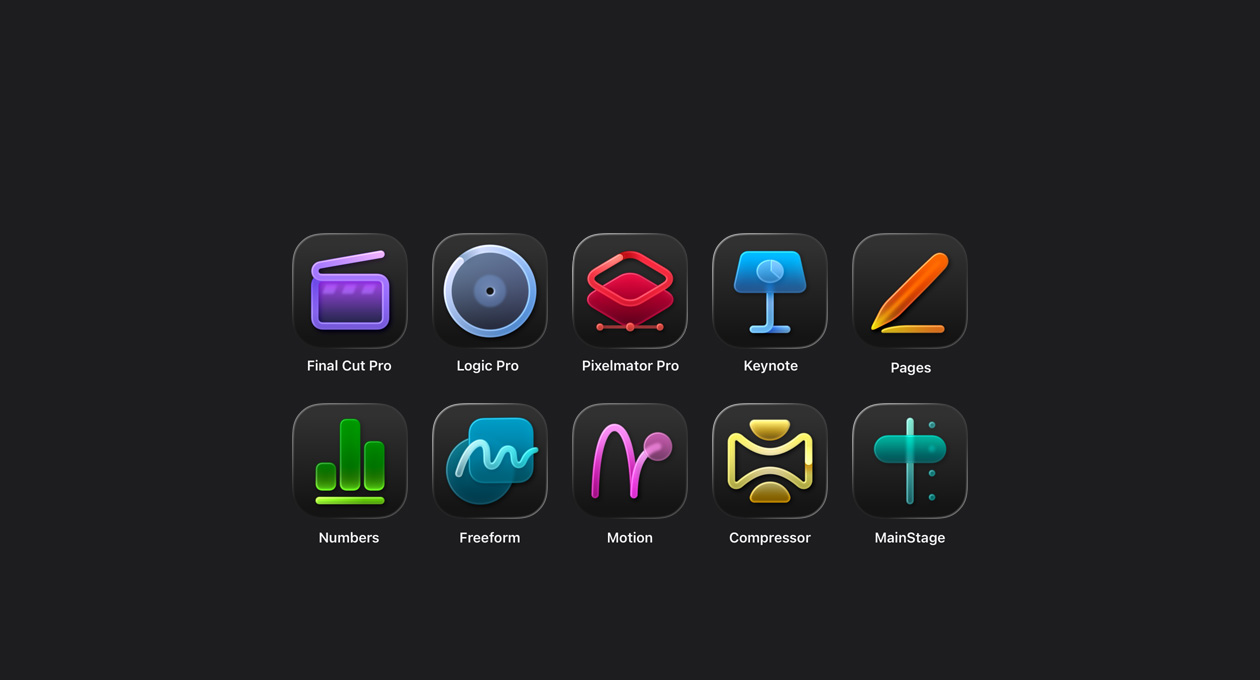
Creative software such as Final Cut Pro, Logic Pro, and GarageBand
-
Mentorship from industry professionals
-
Workshops focused on music, film, photography, design, and coding
More importantly, these studios focus on people, not profit. They are built around the belief that creativity exists everywhere, even where resources do not.
In many ways, Apple Creative Studios are the physical heart of the “Apple Creator Studio” idea.
Hardware That Feels Like a Creative Extension
Apple’s hardware is often described as “beautiful,” but for creators, beauty is secondary to performance and reliability.
MacBooks and Mac Studio
Apple silicon changed everything. With M-series chips, creators can edit 4K and 8K video, render complex animations, and produce music with hundreds of tracks—all on machines that stay cool and quiet.
For many creators, a Mac isn’t just a computer; it’s a studio desk, editing room, and sound booth rolled into one.
iPad as a Creative Canvas
The iPad, especially when paired with Apple Pencil, has become a favorite tool for illustrators, designers, and note-taking creatives. Drawing feels natural. Writing feels personal. Ideas flow freely.
iPhone: The Pocket Studio
With cinematic video, studio-quality microphones, and powerful editing apps, the iPhone has blurred the line between amateur and professional. Entire films, documentaries, and viral campaigns have been created using nothing more than an iPhone.
This accessibility is a key part of Apple’s creator ecosystem.
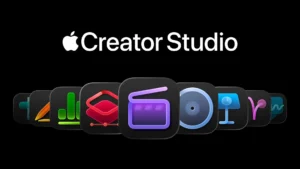
Software That Empowers, Not Overwhelms
If hardware is the foundation of the Apple Creator Studio, software is its soul.
Final Cut Pro
Designed for speed and storytelling, Final Cut Pro gives video creators professional tools without unnecessary complexity. Magnetic timelines, real-time effects, and deep optimization for Apple silicon make it a favorite among filmmakers and YouTubers alike.
Logic Pro
Logic Pro is a music producer’s playground. Whether composing orchestral scores or making electronic beats, it offers studio-grade tools while remaining approachable for beginners.
GarageBand
GarageBand deserves special recognition. It has introduced millions of people to music creation, proving that professional creativity doesn’t need a professional budget.
Swift and Xcode
For developers, Apple provides powerful tools to turn ideas into apps. Swift is designed to be readable and human, making coding feel less intimidating and more creative.
A Human-Centered Creator Ecosystem
What truly sets Apple apart is its human-centered approach.
Apple does not brand creators as “content machines.” Instead, it treats them as artists, thinkers, and builders. Through programs like Today at Apple sessions, Apple Music artist support, and App Store editorial features, creators are encouraged to grow—not just perform.
Even Apple’s privacy stance reflects this mindset. Creators own their work. Their data is respected. Their relationship with their audience is not treated as a commodity.
Vision Pro and the Future of Creative Studios
With the introduction of Apple Vision Pro, the idea of an Apple Creator Studio enters a new dimension—literally.
Spatial computing allows creators to:
-
Edit video on massive virtual screens
-
Design 3D environments in real space
-
Create immersive storytelling experiences
This is not about replacing traditional tools but expanding what creativity can be. Apple’s future studio is not just a room—it’s an experience.
Why Creators Trust Apple
Creators stay loyal to Apple not because of marketing, but because of consistency. Tools work together. Updates improve performance rather than break workflows. Design choices feel intentional.
Most importantly, Apple understands that creativity is emotional. It’s personal. It’s vulnerable.
The Apple Creator Studio—whether physical, digital, or conceptual—is built on that understanding.
Conclusion: More Than a Studio, A Creative Philosophy
Apple Creator Studio is not a single building or product. It is an idea—one that lives in Apple Creative Studios, in MacBooks on café tables, in iPads covered with sketches, and in iPhones capturing moments that matter.
It represents a world where technology steps back and lets creativity step forward.
In a noisy digital age driven by speed and trends, Apple continues to choose depth, intention, and humanity. And for creators around the world, that choice makes all the difference.