
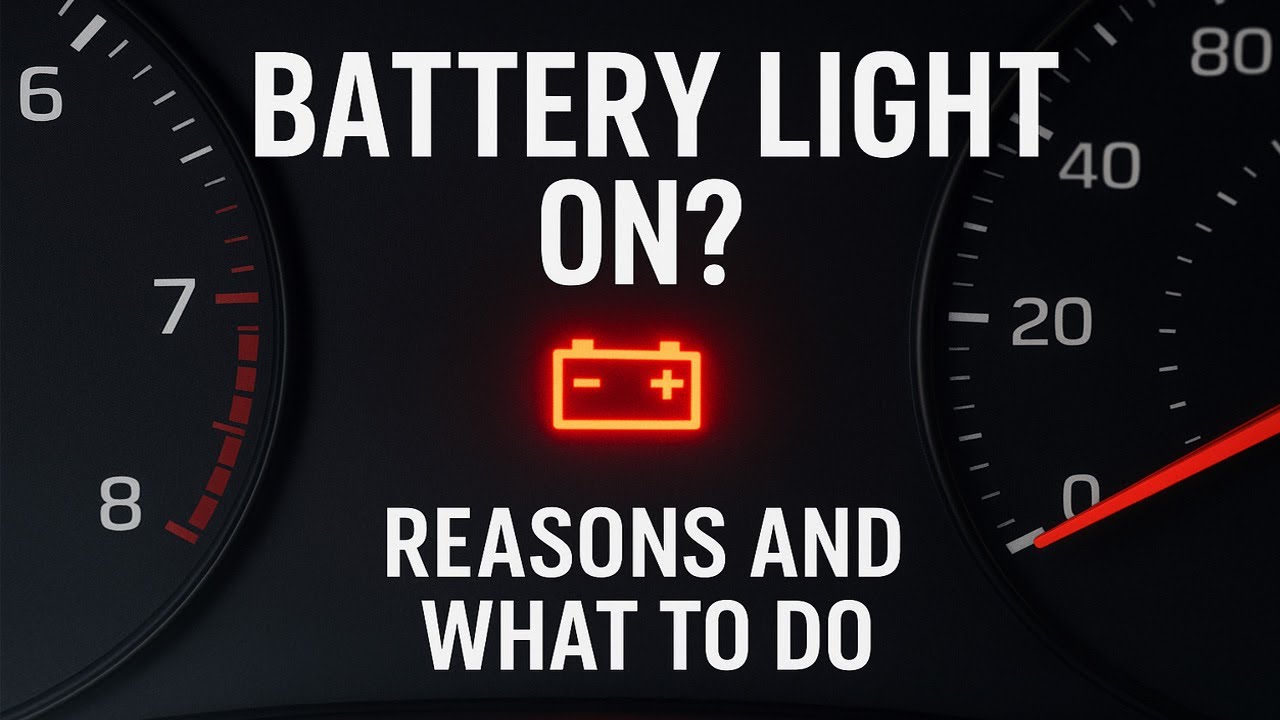
Seeing the battery warning light illuminate on your dashboard is unsettling — especially when your car seems to be running fine. Whether you searched for “battery light on in car,” “car running on battery only,” or “battery light on but car runs fine,” you’re not alone. This is one of the most common — and most misunderstood — warning lights in any vehicle.
This guide breaks down exactly what the battery light means, why it turns on, how long you can safely drive, and what steps to take before you end up stranded.
What Does the Battery Light Mean in a Car?
The battery warning light does not simply mean your battery is dead. In most cases, it signals a problem with your vehicle’s charging system — the network of components responsible for generating and distributing electrical power while the engine runs.
Your car’s charging system includes:
- The battery
- The alternator
- The voltage regulator
- The serpentine belt
- Electrical wiring and connectors
Once the engine starts, your vehicle runs primarily on power generated by the alternator, not the battery. The battery’s primary role is to start the engine and supply a small buffer of power. If the battery light turns on while you’re driving, it almost always means the alternator is failing to keep the battery charged — and your car may be drawing down its stored power reserves.
Why Is the Battery Light On in My Car? (7 Common Causes)
1. Failing or Worn-Out Alternator
The alternator is the most frequent culprit. A healthy alternator produces between 13.5 and 14.7 volts while the engine is running. If output drops below ~13 volts, the battery warning light typically activates. A failing alternator can degrade gradually, which is why many drivers notice the light without any immediate performance problems.
2. Loose or Broken Serpentine Belt
The serpentine belt physically drives the alternator. If it stretches, slips, or snaps, the alternator stops functioning entirely. A broken serpentine belt is a stop-immediately situation — the engine may overheat rapidly and serious mechanical damage can follow.
3. Corroded or Loose Battery Terminals
Corrosion on battery terminals — that white or bluish powder you might see — creates resistance in the circuit and can interrupt normal charging. Loose terminal clamps produce the same result. In some cases, cleaning the terminals resolves the warning entirely.
4. Weak or Aging Battery
Batteries typically last 3 to 5 years under normal conditions. An aging battery may no longer hold a full charge, causing the alternator to work harder and the system voltage to drop. The battery light may activate even if the alternator is functioning correctly.
5. Faulty Voltage Regulator
The voltage regulator controls how much electricity the alternator delivers to the battery. A failed regulator can cause the system to overcharge (potentially damaging the battery) or undercharge (triggering the warning light). In many modern vehicles, the voltage regulator is integrated into the alternator itself.
6. Damaged or Loose Wiring
Frayed, corroded, or disconnected wiring between the alternator, battery, and the rest of the electrical system can break the charging circuit. This is less common but harder to diagnose without professional equipment.
7. Failed Alternator Diode
The alternator contains diodes that convert AC power to the DC power your car uses. A failed diode can cause parasitic drain — the battery slowly loses charge even when the car is parked. A professional load test or oscilloscope reading can detect this.
Battery Light On But Car Runs Fine — Why Does This Happen?
This is the scenario that confuses most drivers: the battery warning light is active, yet the car seems completely normal.
Here’s the explanation. When the charging system first begins to fail, your battery still contains enough stored energy to power all vehicle systems without any noticeable drop in performance. You won’t feel anything wrong. The engine runs, the lights work, the radio plays.
But the reserve is draining. Once it’s gone, the car will stall — often suddenly, sometimes on a highway, and usually without much warning.
Think of it like driving with a gas gauge that reads “E” but the engine still runs for another 20 miles. The system is working, but time is running out.
Do not dismiss the battery light simply because the car drives normally. This is the most dangerous mistake drivers make with this warning.
How Long Can You Drive With the Battery Light On?
There is no universal answer, but most mechanics cite a window of 20 to 60 minutes of continued driving after the battery light activates — assuming the alternator has completely failed and the car is running solely on stored battery power.
Several factors shorten that window significantly:
- High electrical load — Air conditioning, headlights, heated seats, and infotainment systems all drain the battery faster
- Battery age — An older battery holds less charge to begin with
- Engine size — Larger engines with more electronic systems draw more power
- Time of day — Nighttime driving requires headlights, reducing available reserve
If the battery light comes on, treat it as a 30-minute countdown, not a suggestion to watch for later.
Signs Your Car Is Running on Battery Power Only
When your vehicle has lost its alternator charging and is running purely on stored battery power, you will likely notice one or more of the following:
- Headlights that appear dimmer than normal
- Dashboard warning lights flickering
- Power windows operating more slowly
- Air conditioning output that weakens or cuts out
- Radio or infotainment display that resets or shuts off
- Engine that stumbles or stalls at idle
These symptoms confirm that battery voltage is falling. At this stage, you have very little time left to reach a safe location.
Is It the Battery or the Alternator? How to Tell
Many drivers default to replacing the battery when the warning light appears. This is a costly mistake if the alternator is the real problem — you’ll go through the replacement battery just as quickly.
Here are some practical indicators:
Likely the alternator:
- Car starts normally but the light activates while driving
- Symptoms worsen the longer you drive
- Multiple electrical systems begin failing simultaneously
Likely the battery:
- Car struggles to start (slow cranking, clicking sounds)
- Light activates immediately or shortly after starting
- Battery is more than 4–5 years old
Likely both:
- Battery and alternator are both old and have never been replaced
- You’ve jump-started the car more than once recently
Most national auto parts retailers — including AutoZone, O’Reilly Auto Parts, and Advance Auto Parts — will test both your battery and alternator for free. This is the single best first step before spending money on parts.
What To Do When the Battery Light Comes On
Step 1: Reduce Electrical Load Immediately
Every second counts once the light activates. Turn off every non-essential electrical system:
- Air conditioning and climate control
- Heated seats and steering wheel
- Rear window defroster
- Stereo and infotainment
- Phone chargers and USB accessories
- Auxiliary lighting
This preserves battery reserve and extends your window of drivable time.
Step 2: Inspect Visually (If It’s Safe to Do So)
If you can safely pull over and open the hood, check for:
- Battery terminal connections (tighten if loose, note any heavy corrosion)
- Serpentine belt condition (look for breakage, cracking, or slippage off the pulley)
- Burning smell (may indicate electrical issue or overheating)
Do not attempt to drive further if the serpentine belt is broken or if you detect burning smells.
Step 3: Drive Directly to a Mechanic or Auto Parts Store
Do not run errands. Do not make stops. Drive directly — and only — to one of the following:
- A trusted local mechanic or dealership
- An auto parts store for a free battery/alternator test
- Your home, if it is less than a few miles away
Avoid highway driving if possible. A stall at highway speed creates serious safety risks.
Step 4: Get a Proper Diagnosis
A basic multimeter test can confirm whether your alternator is producing proper voltage. A load test will confirm whether your battery can hold a charge under demand. Don’t guess — get a reading before replacing parts.
Battery Light in Hybrid and Electric Vehicles
Searches for “cars on battery” increasingly come from drivers of hybrid or electric vehicles. The situation in these vehicles is more complex.
In hybrid vehicles (e.g., Toyota Prius, Honda Accord Hybrid): A battery warning may refer to either the 12-volt auxiliary battery (which powers electronics) or the high-voltage hybrid battery pack (which powers the drivetrain). These require separate diagnostics.
In fully electric vehicles (e.g., Tesla, Chevrolet Bolt, Ford Mustang Mach-E): The battery warning light typically refers to the high-voltage traction battery or its management system. It may also indicate a charging port issue, thermal management problem, or battery degradation alert.
In either case, EV and hybrid battery warnings should be diagnosed by a technician familiar with high-voltage systems. Do not attempt DIY diagnostics on high-voltage battery components.
Common Myths About the Battery Warning Light
Myth: The battery light means the battery is dead. In the majority of cases, the battery itself is not the failed component. The alternator or a related charging system component is the more likely cause.
Myth: If the car runs fine, the problem can wait. The car running normally means only that battery reserves haven’t been depleted yet. The clock is ticking.
Myth: Jump-starting fixes the issue. Jump-starting provides a temporary charge. If the alternator is failing, the battery will drain again within minutes to hours after the jump. The underlying problem remains.
Myth: The battery light is just a sensor glitch. While occasional false triggers occur — often related to a loose terminal or momentary voltage drop — a persistent battery warning light should never be dismissed as a glitch without verification.
How Much Does It Cost to Fix a Battery Warning Light?
Repair costs vary significantly depending on the root cause:
| Cause | Estimated Repair Cost (USA, 2024) |
|---|---|
| Battery terminal cleaning | $0–$20 (DIY) |
| Serpentine belt replacement | $75–$200 |
| Battery replacement | $100–$300 |
| Voltage regulator replacement | $150–$400 |
| Alternator replacement | $400–$900+ |
| Wiring repair | $100–$500+ |
Labor rates vary by region and vehicle type. Luxury and European vehicles typically carry higher parts and labor costs. Addressing the issue early — before the battery fully dies or the alternator causes further electrical damage — almost always costs less than waiting.
How to Prevent Charging System Problems
Routine maintenance is the most effective way to avoid an unexpected battery warning light:
- Replace the battery every 3–5 years, or at the first sign of slow cranking
- Have the alternator output tested annually, especially on vehicles over 100,000 miles
- Inspect the serpentine belt during every oil change for cracking or fraying
- Clean battery terminals whenever corrosion is visible
- Avoid adding aftermarket electronics without confirming your alternator can handle the additional load
- Schedule a charging system inspection before any long road trip
When to Stop Driving Immediately
Pull over safely and call for roadside assistance if you experience any of the following alongside the battery warning light:
- Sudden loss of power steering (indicates serpentine belt failure)
- Engine temperature rising rapidly
- Burning smell from under the hood
- Rapidly flickering or failing dashboard lights
- Engine stalling or surging
These are signs of imminent and serious charging system failure. Continuing to drive risks damaging additional components — and creates real safety hazards for you and other drivers.
Final Thoughts
The battery light on in your car dashboard is a warning you should take seriously, even when nothing seems wrong. It signals a problem within your vehicle’s charging system — most commonly a failing alternator — that will not resolve on its own.
The window between “warning light on” and “stranded on the side of the road” may be as short as 20 minutes. Reduce your electrical load, avoid unnecessary driving, and get the system tested as soon as possible.
Understanding this light for what it actually is — a charging system warning, not just a battery indicator — puts you in a far better position to act quickly, make smart decisions, and avoid a breakdown that could have been prevented.
5 FAQ Questions (Based on People Also Ask)
Q1: Can I drive my car with the battery light on?
You may be able to drive for 20–60 minutes, but it’s not safe to continue driving normally. The car may be running on stored battery power only, and stalling can happen without warning. Reduce electrical load and head directly to a mechanic.
Q2: What does it mean when the battery light comes on but the car runs fine?
It typically means the alternator is not properly charging the battery, but the battery still has enough stored power to run the vehicle. The situation can deteriorate quickly — treat it as urgent even if performance seems normal.
Q3: Is it the battery or the alternator when the battery light comes on?
If the car struggles to start, the battery is more likely the issue. If it starts normally but the light activates while driving, the alternator is the more probable cause. A free test at most auto parts stores can confirm which component has failed.
Q4: How do I reset the battery light on my car?
The light will turn off on its own once the underlying issue is repaired and the charging system returns to normal voltage output. Disconnecting and reconnecting the battery may temporarily reset it, but the light will return if the root cause is not fixed.
Q5: Can a bad serpentine belt cause the battery light to come on?
Yes. The serpentine belt drives the alternator. If it breaks, slips, or becomes too loose, the alternator cannot generate power, and the battery warning light will activate. A broken serpentine belt requires immediate attention — do not continue driving.